Asterdex review Is a practical look at DEX features, fees, and imports
Asterdex review Is a concise, user-focused guide to what AsterDEX appears to offer: decentralized trading, possible spot and perpetual markets, self-custody workflows, transaction exports, and fee considerations. It is not a recommendation to trade. The useful takeaway is simple: AsterDEX may appeal to active DeFi users who want multi-chain trading and advanced order tools, but every user should verify fees, supported networks, token risks, and export options from official sources before connecting a wallet.
Asterdex review pages usually attract two different search intents. Some readers want to know whether the exchange is useful for swaps or leveraged trading, while others are trying to understand how to export transactions for portfolio tracking or tax preparation. This article covers both angles in one place, because the trading experience and the recordkeeping experience are closely connected for anyone who uses a decentralized exchange more than once.
What is Asterdex review actually reviewing?
Asterdex review is reviewing AsterDEX as a decentralized exchange experience rather than as a traditional brokerage or centralized crypto account. A DEX normally lets users trade from a self-custody wallet, interact with smart contracts, and retain direct control over assets until a transaction is signed. That model can give traders more autonomy, but it also shifts more responsibility to the user.
Asterdex review should be understood in the broader DeFi context. Decentralized exchanges often combine token swaps, liquidity pools, perpetual futures, collateral management, order routing, and wallet-based authentication. AsterDEX has been discussed as a platform that aims to blend familiar trading features with on-chain settlement, which is why users compare it with other perpetual DEX and multi-chain trading venues.
Asterdex review also matters because names in crypto can be inconsistent across apps, token tickers, wallets, and portfolio tools. Before sending funds or signing a transaction, confirm that the site, contract, network, and wallet prompt match the official AsterDEX materials. A convincing interface is not enough; users should check the domain, supported chains, and community announcements through official channels.
How does Asterdex review explain the trading workflow?
Asterdex review begins with the basic workflow: connect a compatible wallet, choose a supported network, deposit or select collateral if the product requires it, review the market, set the trade parameters, and sign the transaction. In a DEX setting, a wallet signature is the point where the user authorizes an action, so it deserves more attention than a normal website click.
Asterdex review readers should distinguish between spot swaps and perpetual derivatives. A spot swap is generally a direct exchange between assets, subject to routing, liquidity, slippage, and network fees. A perpetual trade is a leveraged derivative position with liquidation risk, funding rates, margin requirements, and a different risk profile. The same platform can feel simple on the surface while exposing users to very different mechanics underneath.
Asterdex review also highlights that some DEX platforms offer more than one interface style. A simplified trading mode may focus on fast execution, while an advanced or pro mode may include charts, limit orders, order books, collateral settings, and position controls. For a new user, the safer habit is to start by understanding each field on the confirmation screen before increasing size or leverage.
What features might matter most on AsterDEX?
Asterdex review is most useful when it separates marketing language from practical features. A trader evaluating AsterDEX should look for supported chains, supported assets, wallet compatibility, order types, charting tools, collateral choices, liquidation information, and transaction export options. These are the details that determine whether the exchange fits a real workflow.
Asterdex review also considers features that are common in modern DeFi trading venues. Multi-chain access can reduce the friction of moving between ecosystems such as BNB Chain, Ethereum, Solana, or Arbitrum if they are supported at the time of use. However, chain support can change, and every network has its own fee model, wallet behavior, token standards, and explorer tools.
- Check whether the market is spot, perpetual, or another derivative product.
- Confirm the network, token contract, and wallet approval before signing.
- Review slippage, funding, leverage, liquidation, and routing details.
- Test transaction exports before relying on them for reporting.
- Use small transactions first when learning a new DeFi interface.
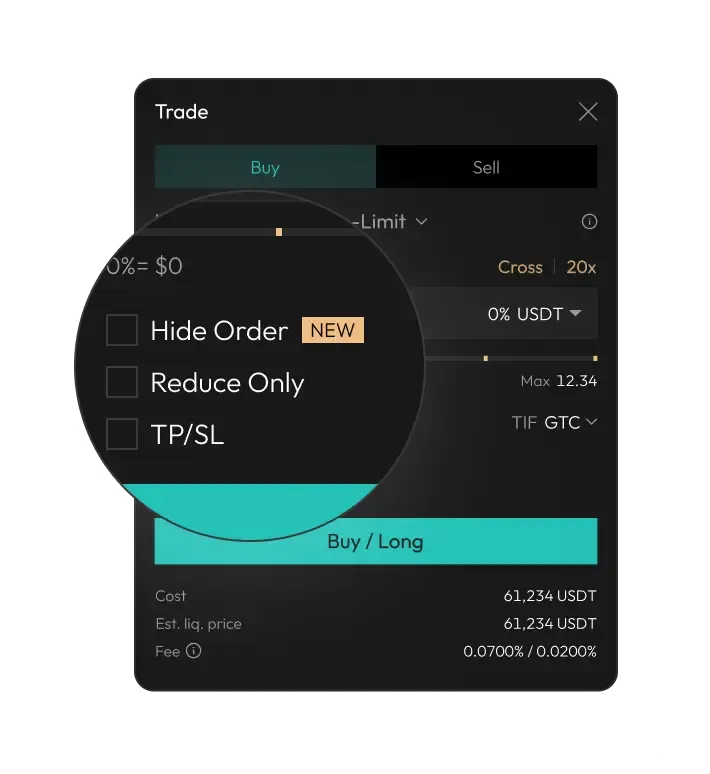
Asterdex review should not treat advanced features as automatically safer or better. Hidden orders, MEV-aware routing, one-click trading, and high leverage can be useful to experienced traders, but each feature has tradeoffs. A one-click flow may reduce friction, while also making it easier to move too quickly. Leverage can magnify gains, but it can also erase collateral rapidly.
Fees and costs of Asterdex review for everyday users
Asterdex review needs to discuss fees carefully because DEX costs often come from several places at once. A user may pay trading fees to the protocol, network gas fees to the blockchain, possible funding payments on perpetual positions, slippage from market depth, and spreads between bid and ask prices. The visible fee is only one part of the total cost.
Asterdex review cannot guarantee a current fee schedule because crypto fee structures change. Trading tiers, token discounts, maker and taker rates, chain congestion, and promotional campaigns can all affect the amount paid. Before trading, users should check the live order preview and any official fee documentation. If the interface shows an estimated total, compare it with the wallet confirmation before signing.
| Cost type | Why it matters | What to verify |
|---|---|---|
| Trading fee | Charged by the exchange or market contract | Maker, taker, spot, and perpetual rates |
| Network fee | Paid to the blockchain for execution | Gas estimate and selected network |
| Slippage | Price movement during execution | Slippage tolerance and liquidity depth |
| Funding | Periodic cost or credit on perpetuals | Current rate and next funding time |
Asterdex review users who trade frequently should keep records of all these costs. Portfolio trackers and tax tools may import trades, but they may not always classify every fee correctly. A simple habit of reviewing transaction history after each session can prevent confusion later, especially when moving across chains or using leveraged products.
How can Asterdex review help with imports and transaction history?
Asterdex review has a recordkeeping side because DEX users often need exports for accounting, portfolio tracking, or tax software. A typical import process starts by logging in or connecting to the account area, opening transaction history, and using an export function if the platform provides one. Demo environments may not include import or export features, so a real account view may be required.
Asterdex review should make clear that exports are only as useful as the data they contain. Good transaction files normally include timestamps, markets, token symbols, quantities, fees, trade direction, realized profit and loss where applicable, and transaction identifiers. If a file lacks chain IDs or wallet addresses, users may need blockchain explorers or wallet records to reconcile activity accurately.
Asterdex review readers looking for a workflow can start with an internal if their goal is to move transactions into a tracker. For broader comparisons, an internal section can help place AsterDEX beside other DeFi tools without treating any single venue as universally best.
Asterdex review also recommends testing exports before year-end reporting. Waiting until tax season to discover missing symbols, unsupported chains, duplicate entries, or incorrect fee handling can create unnecessary work. Users should compare platform exports against wallet activity and block explorer records, especially after deposits, withdrawals, liquidations, staking, rewards, or cross-chain actions.
Is Asterdex review positive about safety?
Asterdex review is cautious about safety because decentralized finance combines smart contract risk, market risk, wallet risk, and operational risk. A non-custodial model can reduce dependence on a centralized exchange account, but it does not remove the danger of flawed contracts, malicious approvals, phishing sites, unstable assets, thin liquidity, or mistakes made while signing transactions.
Asterdex review should prompt users to look for audits, public contract addresses, bug bounty information, incident history, documentation quality, and transparent communication. These signals do not guarantee safety, but they help users evaluate whether a protocol is mature enough for their risk tolerance. A platform connected to a larger ecosystem still needs direct verification at the contract and product level.
Asterdex review is especially cautious around extreme leverage. Perpetual DEX products can liquidate positions quickly when markets move against collateral. Funding rates can also change the economics of a trade over time. A trader who does not understand liquidation price, maintenance margin, and stop settings should avoid treating a leveraged interface like a basic swap tool.
Asterdex review also points out wallet hygiene. Use hardware wallets for meaningful balances when possible, separate trading wallets from long-term storage, revoke unused approvals, avoid signing unclear messages, and double-check domains. These habits are not specific to AsterDEX; they are basic DeFi safeguards for any self-custody trading environment.
Who is Asterdex review most useful for?
Asterdex review is most useful for active crypto users who already understand wallets, networks, token approvals, and the difference between spot assets and derivatives. AsterDEX may be attractive to traders who want on-chain execution, multi-chain access, advanced order controls, or a workflow that keeps them closer to self-custody than a centralized exchange account.
Asterdex review is less suitable as a beginner-only explanation if the reader has never used MetaMask, a hardware wallet, a blockchain explorer, or a DEX swap. New users can still learn from the article, but they should practice with small amounts and simple transactions before exploring margin, perpetuals, or complex collateral. Crypto losses from user error are often irreversible.
Asterdex review also serves accountants, portfolio managers, and tax-preparation users who care less about the trading interface and more about clean transaction records. For those readers, the key question is not just whether the DEX works, but whether its exports can be reconciled with wallet history and imported into the tools they already use.
How does Asterdex review compare with alternatives?
Asterdex review should compare AsterDEX with categories rather than pretending one exchange fits everyone. Centralized exchanges may offer simpler account recovery, fiat ramps, customer support, and unified reports, but they require custody or account trust. Decentralized spot exchanges can be straightforward for swaps, but may lack advanced derivatives. Perpetual DEX platforms can offer sophisticated trading while adding margin and liquidation complexity.
Asterdex review readers can evaluate alternatives by asking practical questions. Which chains are supported? Are the markets liquid enough? Is the fee preview clear? Can the user export history? Are contracts documented? Does the interface explain liquidation and funding before a trade is placed? These questions are more useful than relying on token hype or short-term trading volume claims.
Asterdex review also notes that ecosystem alignment can be both a benefit and a risk. Strong backing, recognizable supporters, or integration with popular chains can accelerate adoption, but users should still examine decentralization, token concentration, governance design, and dependency on any single ecosystem. A DEX is only as reliable as its contracts, liquidity, market design, and operational transparency.
How to approach AsterDEX before using real funds
Asterdex review closes with a practical approach: verify first, trade later. Start by confirming the official domain and documentation, then connect a wallet with limited funds, inspect the interface, and make a small test transaction only after understanding the network and fee preview. If the transaction history export matters to you, test that workflow early rather than assuming it will be available in the exact format you need.
Asterdex review also encourages users to separate curiosity from commitment. Reading about a DEX, watching market activity, or exploring a demo does not create an obligation to deposit funds. The best decision may be to wait until documentation, liquidity, reporting, or security information is clearer. In DeFi, patience is often a risk-control tool.
Asterdex review is ultimately a reminder that AsterDEX appears to sit in a fast-moving part of crypto: decentralized trading, perpetual markets, multi-chain access, and self-custody recordkeeping. Those features can be powerful for experienced users, but they require careful verification. Check official sources, understand the trade type, respect leverage risk, and keep clean records before relying on any DEX for meaningful trading activity.
Questions and Answers
What is Asterdex review about?
Asterdex review is about evaluating AsterDEX as a decentralized exchange experience, including trading features, possible multi-chain access, fee considerations, wallet-based workflows, and transaction exports. It is intended as informational content, not financial advice. The main point is to help users understand what to verify before connecting a wallet, placing trades, or relying on exports for reporting.
Is AsterDEX a centralized exchange or a decentralized exchange?
AsterDEX is generally discussed as a decentralized exchange, meaning users interact through wallets and smart contracts rather than a traditional custodial exchange account. That can support self-custody workflows, but it also gives users more responsibility. Before using it, verify the official domain, supported chains, contract details, fee schedule, and product documentation directly from official AsterDEX sources.
What fees should users check before trading on AsterDEX?
Users should check protocol trading fees, network gas fees, slippage, spreads, and any funding rates if they are using perpetual derivatives. The total cost can vary by chain, market liquidity, order type, and network congestion. Asterdex review recommends comparing the platform’s trade preview with the wallet confirmation before signing any transaction.
Can AsterDEX transaction history be imported into tracking software?
AsterDEX may provide transaction history exports that can be used with portfolio or tax tracking workflows, but users should verify the current export process in the live platform. A useful export should include timestamps, traded assets, quantities, fees, and transaction identifiers. Always compare imported data with wallet records and block explorer activity to catch missing or duplicated entries.
Is AsterDEX safe to use for leveraged trading?
No platform can make leveraged trading safe in the ordinary sense. Perpetuals and margin products can liquidate collateral quickly, especially during volatile market moves. Users should understand liquidation price, funding rates, collateral rules, and position size before trading. Asterdex review treats leverage as an advanced feature that requires careful risk controls and official documentation review.
Who might find Asterdex review useful?
Asterdex review is useful for DeFi traders, wallet users, portfolio trackers, and tax-preparation users who want a plain-language view of AsterDEX. It is especially relevant for people comparing decentralized exchanges, checking whether transaction exports are available, or trying to understand the risks of self-custody trading, multi-chain markets, and perpetual derivatives.
What should a new user do before connecting a wallet to AsterDEX?
A new user should verify the official website, inspect the wallet prompt, confirm the selected network, and avoid approving broad token permissions without understanding them. It is sensible to use a separate trading wallet with limited funds for testing. Users should also read current documentation and confirm fee, export, and market details before relying on the platform.